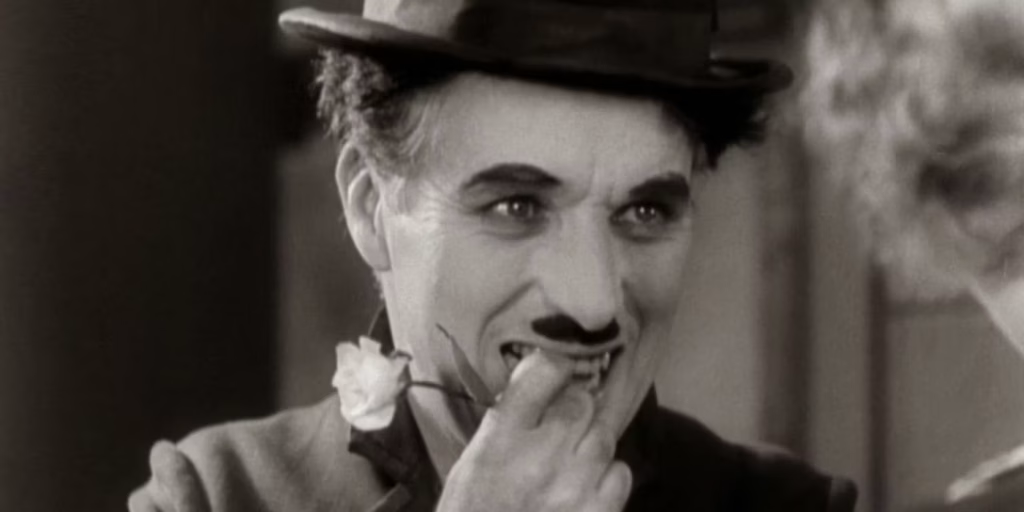
Charles Chaplin, 1931. When I made my first music video, I wanted it to be funny. I remember sitting down at my desk and writing it out frame by frame, looking to maximize the amount of gags within each of the two hundred and thirty one seconds. It was, like finding the right combination of words to fit a phrase of music, an energizing and rewarding challenge; a realization that working within limitation could open more doors than it would close.
And then I consider Chaplin, at the top of his game, facing a tidal wave of change that threatens to wash away the world in which he became king, imposing an unfashionable limitation upon himself and maximizing all four thousand eight hundred and sixty seconds until he produced something that could exist, perfectly preserved under the depths of this sea change, as the most timeless film ever created. The stakes, my friends, were only slightly higher.
Homage is meant to be noticed, and thus often corny. Influence, however, hides in plain sight. When I made my music video, I had never seen a Chaplin film. Yet when I watch it back, there he is (albeit in a much less talented form). Post City Lights, Chaplin’s influence no longer hides from me.
So as I was thinking of what to say about a film that essentially serves as an epitaph to silent cinema (because pretty much everything has been said already), I considered anchoring it to the idea that “art loves limitation more than any else”. Feeling suspicious I was regurgitating something I had read long ago, I googled. To absolutely no one’s surprise, I was right. “The absence of limitation is the enemy of art” is a quote made famous by Orson Welles, director of what many believe to be the greatest film ever made. And what was his favorite film? I’ll give you one guess.
City Lights.