The birth of my daughter has made updating my reader-less blog a less than mandatory exercise upon finishing a movie, mainly because I no longer have the luxury of endless time nor the energy to think critically about what I’ve seen for more than a few minutes. In short, being a father has made me both tired and stupid. Squeezing in a film has become a minor victory in the day-to-day. A blog post? A major one.
I did, however, find the time to see two of Jean Vigo’s films, Zero for Conduct (1933) and L’Atalante (1934). The former is a “kid’s movie”, meaning it took the perspective of children and presents the adult world as repressive, inane and dull. Naturally then, the adults are deserving of tricks, pranks, and general irreverence. I’m assuming it’s likely the first film to do this, or at least the first to do it exceptionally well, so it has quite the legacy. Think The Sandlot, Little Rascals, Home Alone, or any movie that features children harboring a comic disregard for parental authority. It comes as no surprise then the father of this genre’s father was a notorious anarchist. Ni dieu ni maitre!
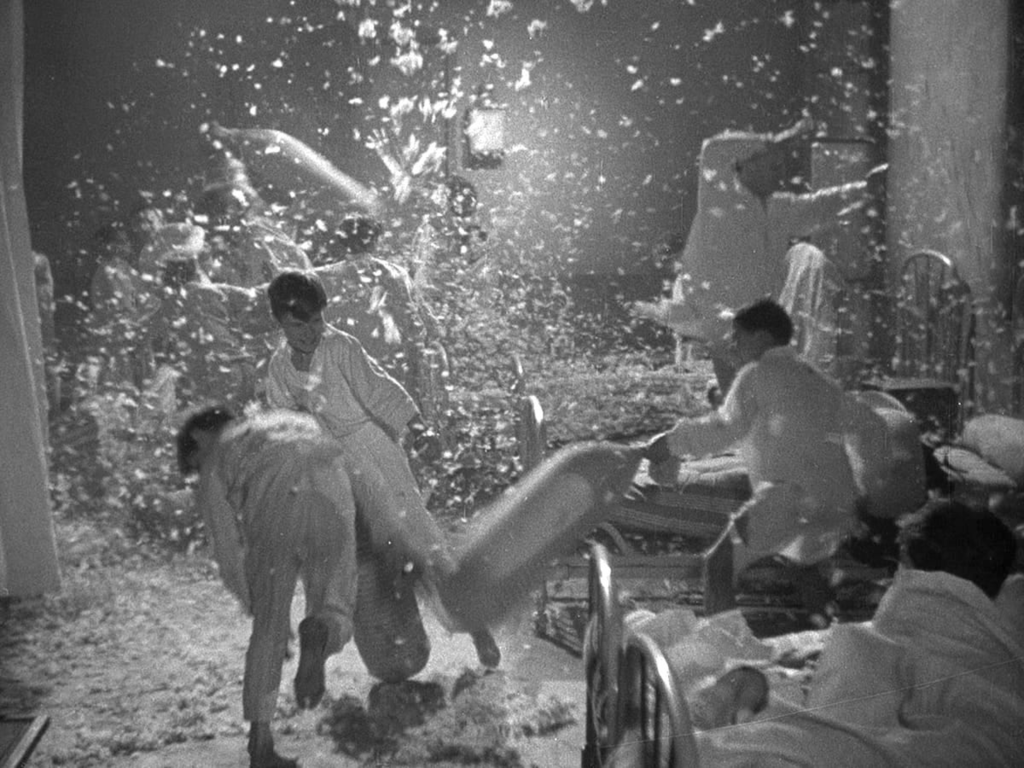
The most compelling part of the film comes when the teachers try to persuade the sensitive boy (no doubt based on the director himself) to ally with them and rat on his fellow schoolmates. There’s some dramatic tension, because the other students have already been a bit standoffish towards the boy on account of his soft-ass demeanor and we as the audience are not entirely sure which way he’ll turn. He ultimately makes his allegiances known in a very public way by telling his slobbish science teacher to eat shit in front of the entire class. With their potential defector now safely on their side, the boys (there are no female students) are then free to openly scheme their revolution against the school, which they pull off successfully on the school’s most important day. The most iconic image (the majestic pillow fight being a close second) is the ending, with the children triumphantly “escaping” their school via the roof, giving us the impression they may begin flying any second. At only 49 minutes, it feels like a feature.

I was reminded of several times in my schooling years when teachers pulled me aside to ask for some kind of assistance. Usually it was something easy to oblige like making the new kid feel accepted, but the tension of being “in” with the teacher while being “in” with your peers still created alienation from both parties. In such circumstances, turning inward presents itself as the only safe harbor. If Vigo is indeed recreating scenes from his own childhood, it seems he was able to use this conflict to both cultivate his artistry and tell his teachers to fuck off.
L’Atalante is considered his better film, though it failed to capture my attention as much. Michel Simon’s character certainly did though, and his performance as a grisly sailor absolutely dominated the screen.

A tattooed and french speaking Hugh Grant giving big Zorba the Greek energy.
Essentially, a girl from a small town (Dita Parlo) marries a sailor (Jean Dasté) in a romantic fever with dreams of worldwide adventure only to find marriage harder than expected, the outside world crueler than imagined, and the grass always a bit greener than where she’s standing at any given moment. Her hothead husband seems to make everything worse with his youthful jealously and spurts of inadequacy, especially in response to the well-traveled Père (Michel Simon), who swaggers his dad bod all over the screen in a way that suggests he’s perfectly OK with you seeing him in the buff. In fact, come take a seat, he’s going to cook you onion soup with his balls out.
It’s familiar territory for men of a certain age. You’re trying to impress a girl, she’s into you on a certain level, but then she’s absolutely charmed by some guy who has something you’re absolutely incapable of offering: experience. Even worse, he’s making her laugh. These are the kind of things that drive young men to high-powered careers only to find themselves wealthy and still woefully under-experienced in anything other than making the money that was supposed to solve the problem in the first place. Vigo, who has in his twenties when he directed L’Atalante, surely knew it well: rizz is a hard currency to come by.
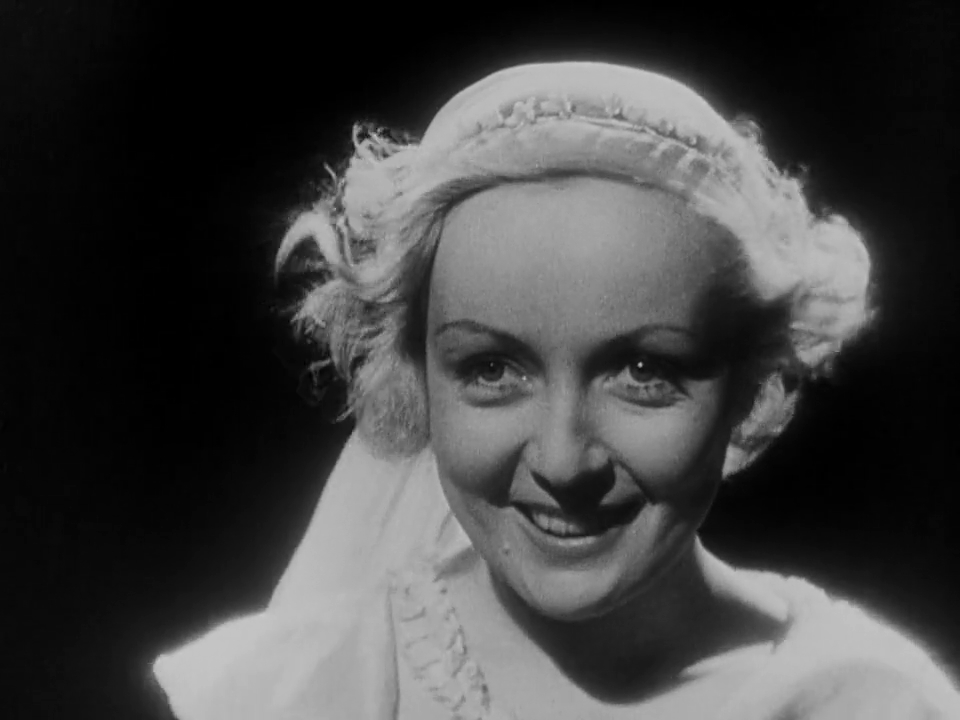

Apparently Dita Parlo’s performance and look inspired Madonna’s beloved children’s book Sex, which is a fun piece of trivia if you’re trying to impress a Madonna fan.
Leave a Reply
You must be logged in to post a comment.